Redesigning a machine learning tool for a direct-to-consumer launch
Improving the onboarding and self-serve experience for Ex Machina, a no-code AI/ML analytics tool
Background
C3.AI is an enterprise AI software company that is committed to accelerating digital transformation in various industries ranging from manufacturing, utilities and finance. C3.AI offers both SAAS (software as a service) and PAAS (Platform as a Service) applications to enable engineers to rapidly deploy, deploy and operate large-scale AI applications.
Ex Machina was a no-code analytics and machine learning tool that was offered to PAAS customers on the side and only used by a handful of enterprise customers. Seeing the market growth for low-code/no-code tools C3.AI wanted to relaunch Ex Machina in early 2021 as a standalone product.
I was a product designer on the Ex Machina team and worked with 1 other designer, 1 product manager and 1 product marketing manager during a span of 5 months from Sept 2020 to Jan 2021 to redesign Ex Machina for a direct-to-consumer launch.
The demand for no-code tools is growing. C3.AI wanted to redesign Ex Machina as a no-code analytics and machine learning tool for anyone to use.
Research
In order to understand how we might best redesign the product for a direct-to-consumer launch, we conducted contextual interviews with current enterprise customers to understand their current user experience and where we might improve. We also interviewed 8 users in analytical and data science roles to understand user needs for a self-service analytical tool. Lastly, we looked at competitor products see what they did well and how we might differentiate Ex Machina.
Key insights
Current enterprise users
1. Core value: Current users valued Ex Machina because it allowed them to easily clean and analyze large amounts of data using very little code. As one user put it “Great for business users to obtain data without knowing SQL and able to do quick ad-hoc investigations.”
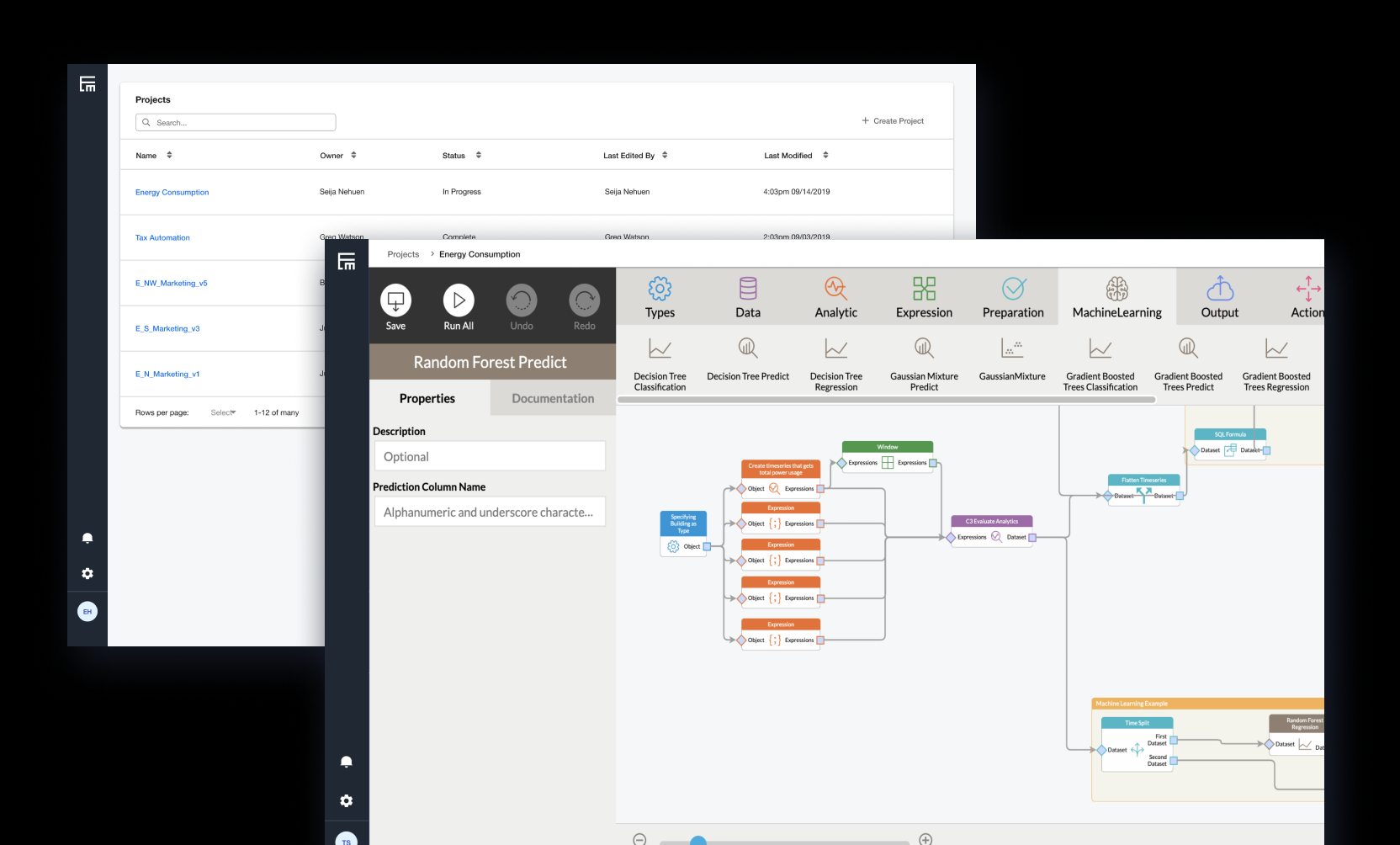
2. Usability problems: Users noted that the current drag and drop UI was difficult to use. The node palette hid many valuable features and made it difficult to browse and find the right function.
3. User management: Users were not easily able to manage their cluster (group of computers that provide processing power) or costs. Without this information, it was difficult for users to optimize the workflow and manage spending.
Future self-serve customers
1. Product perception: When shown the legacy Ex Machina, new users were unclear as to what Ex Machina did. One user thought it was a diagramming tool while another thought it was for just data integration or processing.
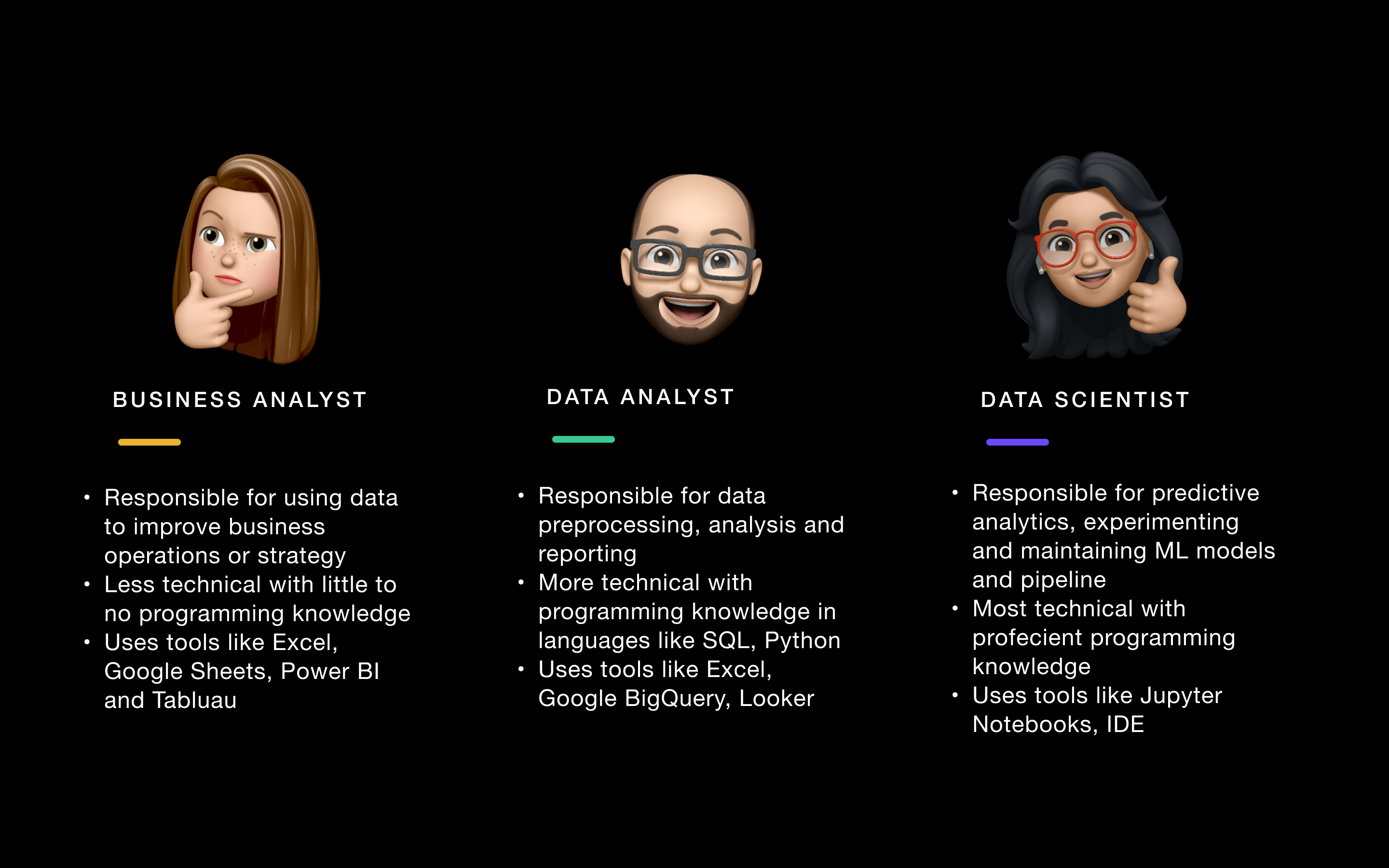
2. Product value for different personas: The Ex Machina concept resonated more with data and business analysts and less with data scientists who seemed comfortable (and even preferred) coding and mostly content with their current toolset for their data needs(e.g., Jupyter Notebooks). In particular data and business analysts with high analytics needs but low data infrastructure maturity were relatively dissatisfied with current tools.
3. Barrier to entry: The less technical users (business analysts) did not know how to start creating a data project. One user mentioned "I've never used a tool like this".
Challenge
How might we redesign Ex Machina so that new users can easily understand the product and get started on a project and current users can easily manage their workflows and costs?
Design Iterations
After the research period, the team brainstormed various solutions to improve onboarding and project creation for new users and cost and usage management for existing users.
Solutions
Seamless onboarding
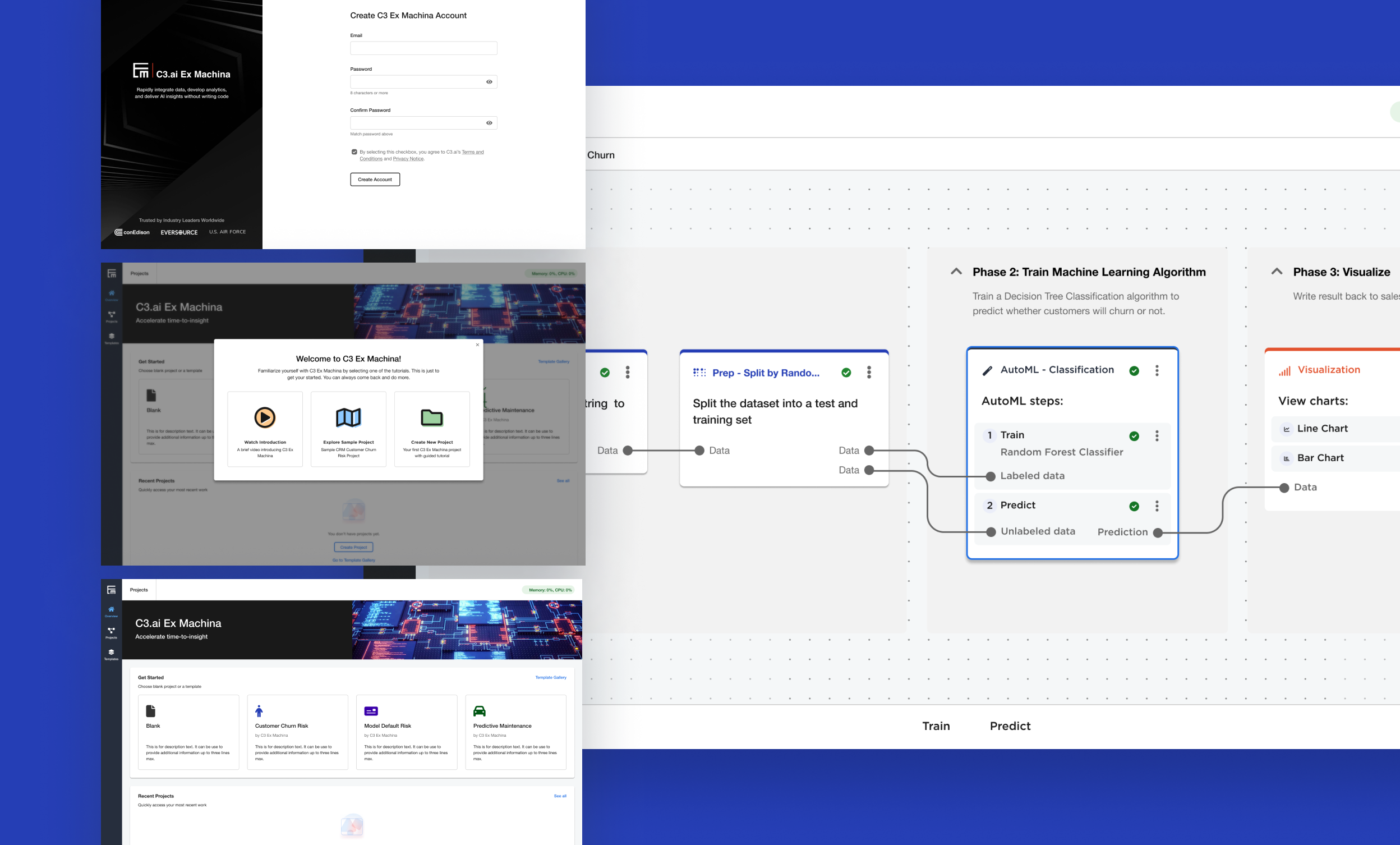
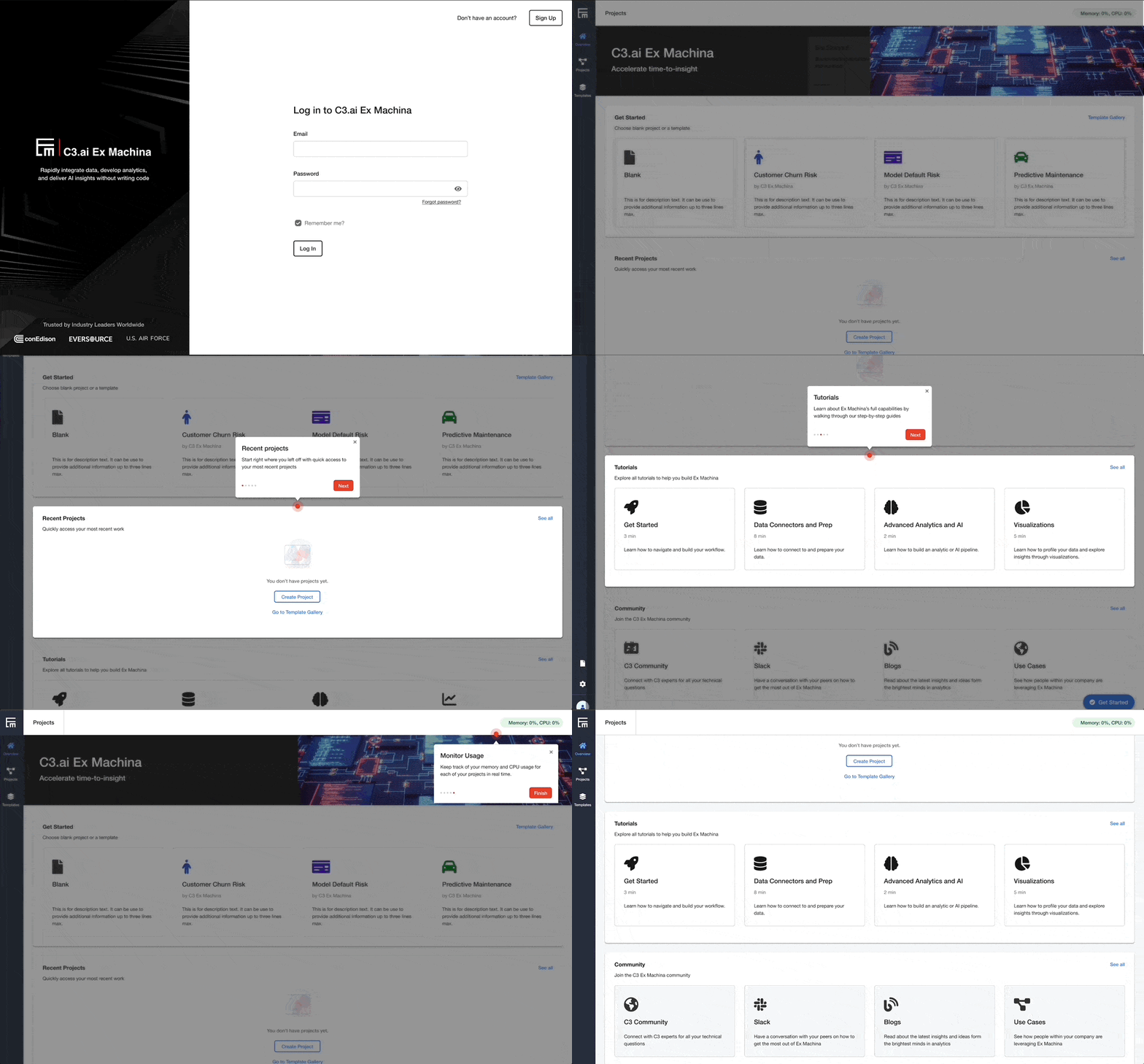
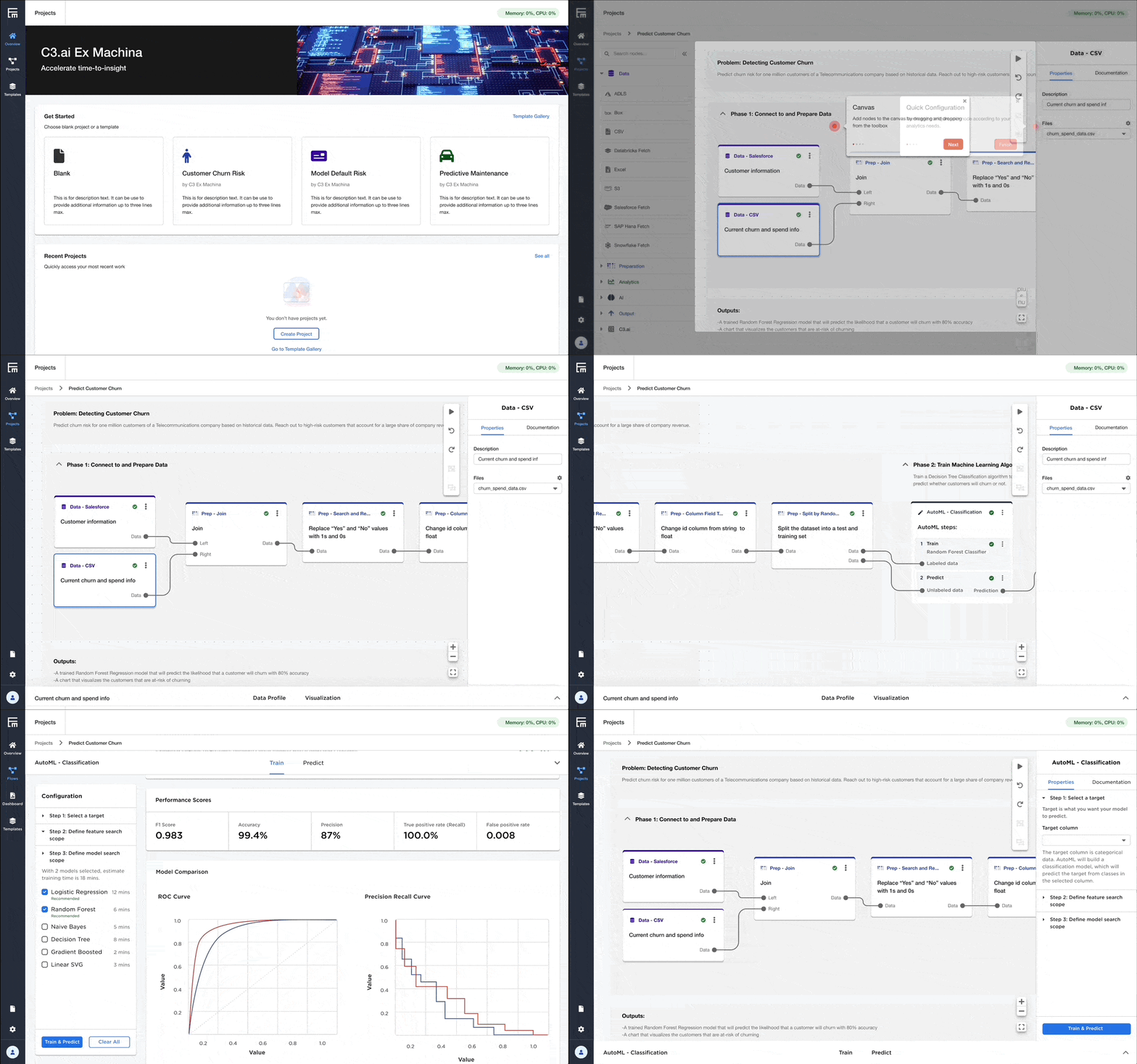
I created an onboarding experience that included an efficient signup, prebuilt templates and tutorials so that new users could easily and quickly understand, evalute and try the product.
Templates on creating a machine learning workflow
I created several example templates for common use cases so that users can see how an analytics or data science project was built in Ex Machina. This included showcasing our AutoML feature, an easy way to train models and make predictions without using code.
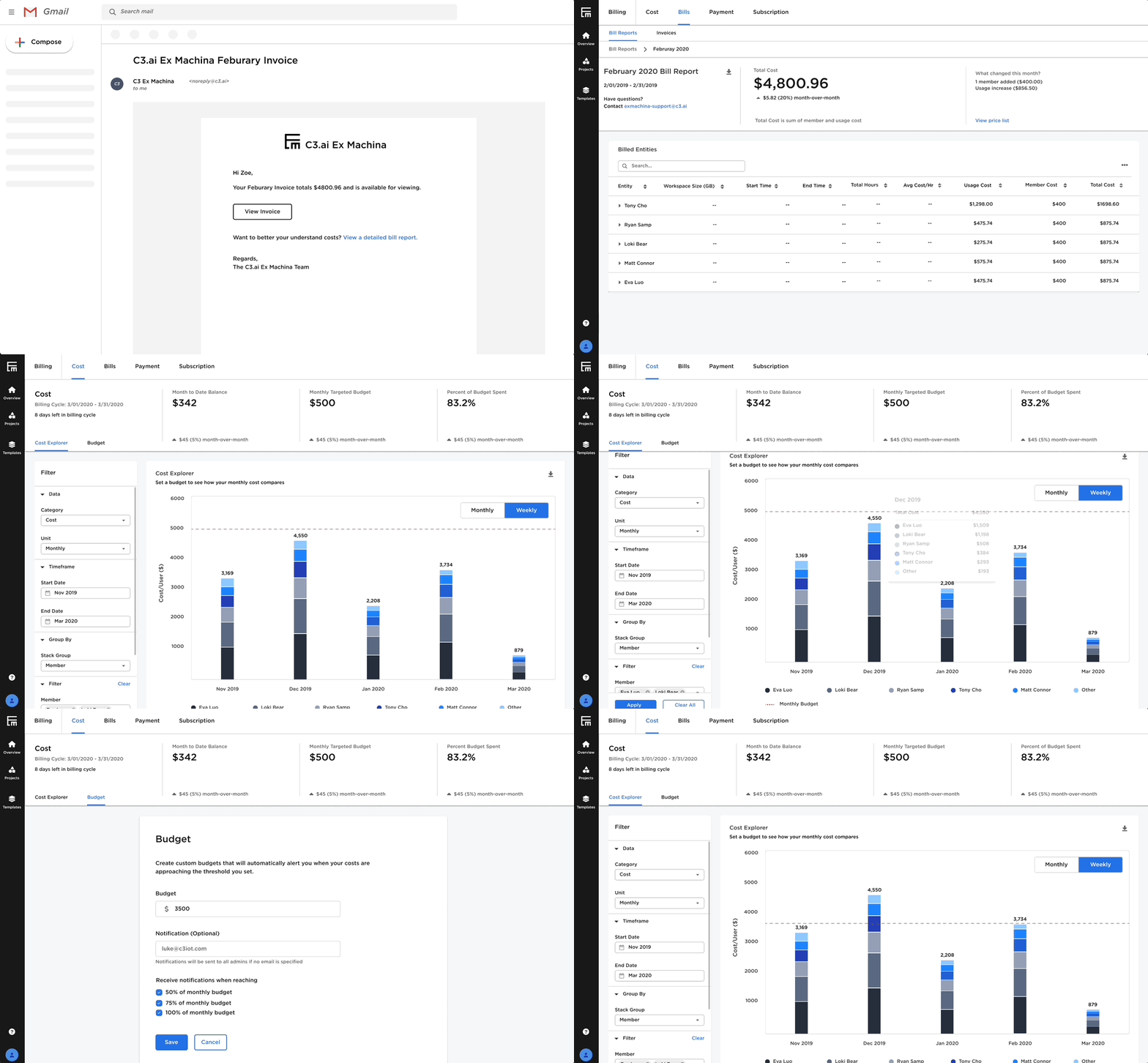
Self-serve billing and management
Creating a way for users to easily view and understand their monthly costs allowed them to better manage their usage and costs with minimum customer assistance.
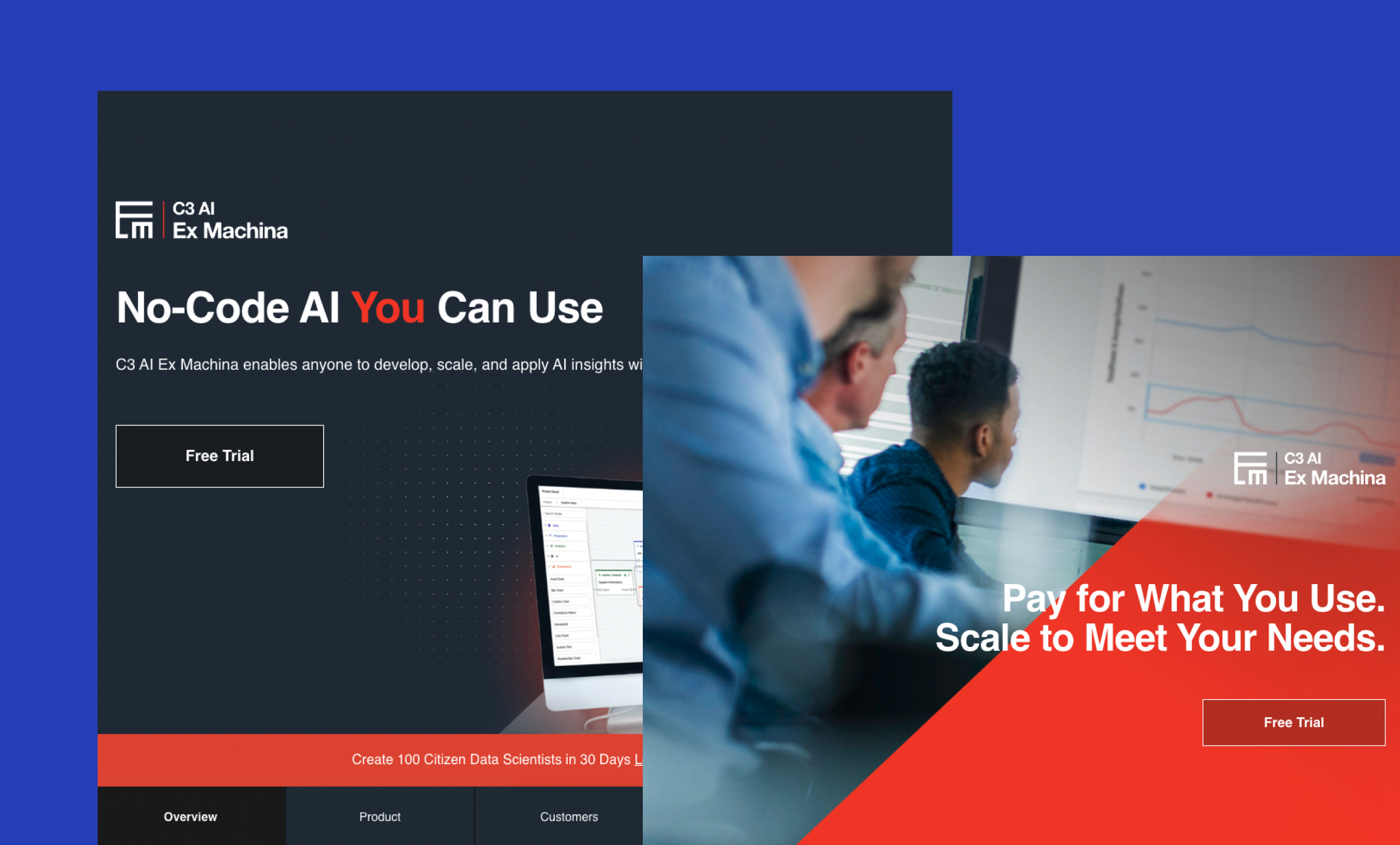
Trial and upgrade experience
Lastly, users were allowed to try the product in full for free for 30 days to allow them sufficient time to evaluate the product before they needed to upgrade to a paid subscription.

Product launch
The product was officially launched in Feburary of 2021. The official product and marketing page can be found here. The product was also demoed and featured in C3.AI’s 2021 Transform conference, an annual conference to showcase to customers new products. Since the launch, Ex Machina has more than doubled the number of clients and increased sales revenue.
Learnings
While working on this project, I learned there needs to be a balance between prioritising the needs of current enterprise customers versus future stand-alone customers who will use the product in different ways and therefore have different needs. I also gained appreciation for the role of product marketing in helping market, brand and launch the product and the importance of including them in the research and design effort so that the team was on the same page. Lastly, while in today’s post-COVID world working remote is often the norm, I saw the value of being able to conduct workshops and interviews in person.